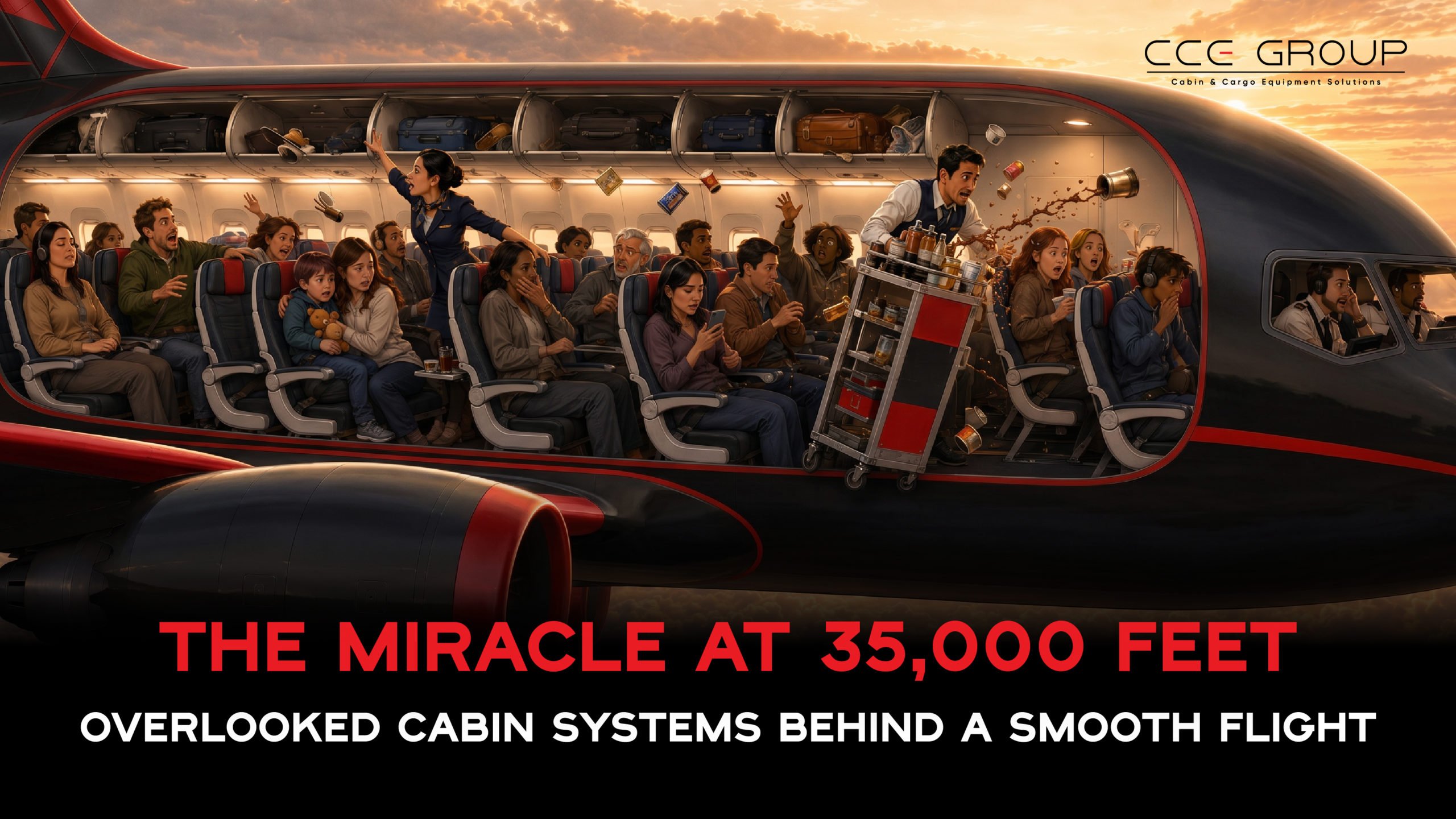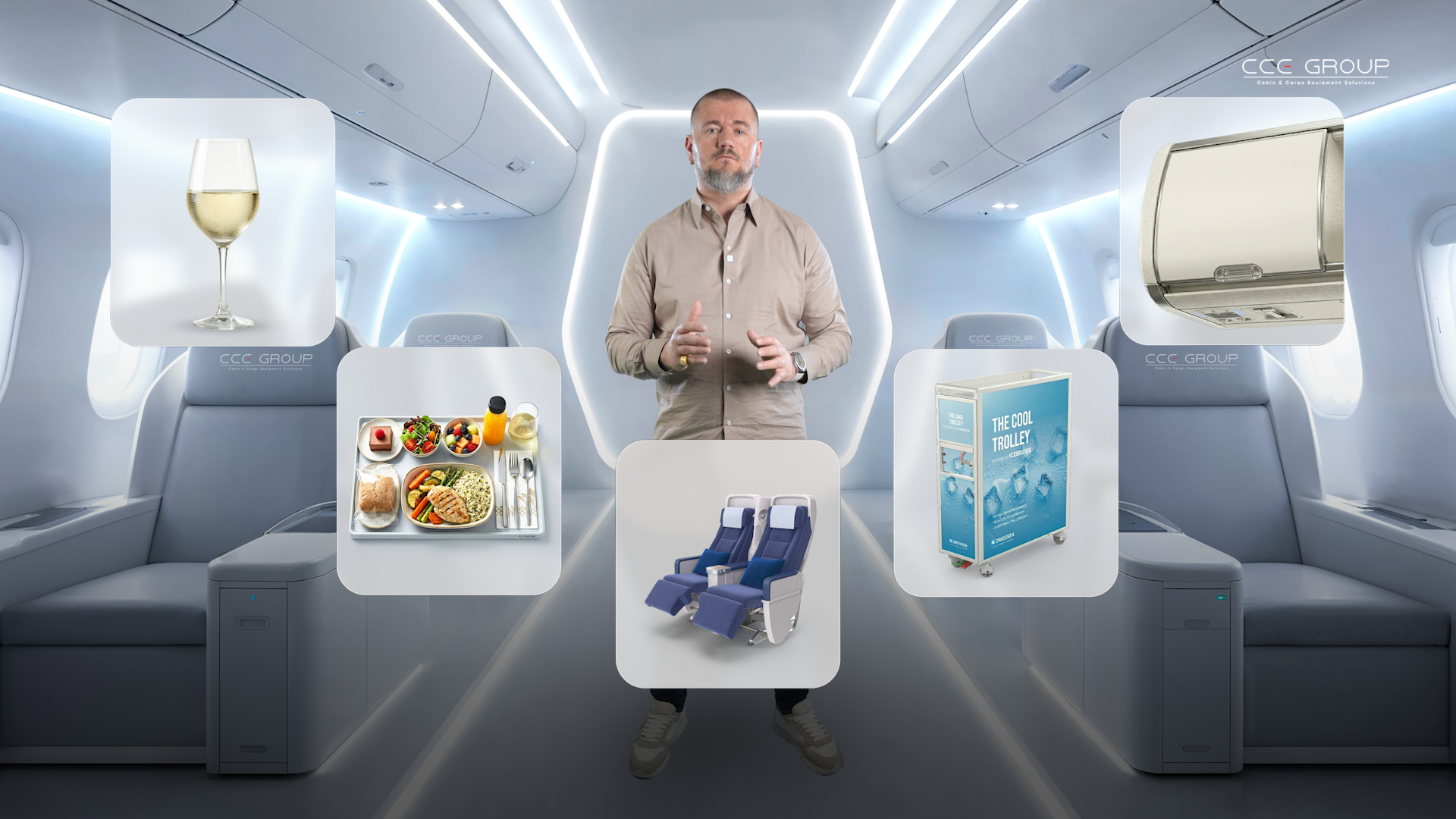
Flying is a technological miracle we barely notice anymore. We walk into a machine, sit above the clouds, and expect everything to feel normal.
I am Klaus Hofmann, Group CEO of CCE Group. We work behind the scenes in cabin and cargo, solving the problems passengers only notice when something goes wrong.
This video is about the cabin: the part of the aircraft every passenger experiences, but few ever really think about.
You order a drink. You eat a meal. You trust the seat, the trolley, and the overhead bin above your head.
When those hidden systems work, the flight feels normal. When one fails, passengers really notice.
The Cold Drink
When your drink arrives warm, you know something went wrong. You just do not know how early it started.
You ask for water, juice, beer, champagne. You expect it to be cold. Simple.
An aircraft galley is not a hotel kitchen. There is no fridge behind the curtain. Cooling has to be planned, packed, loaded, protected, and served.
So the cooling has to travel with the drink.
The drink is cooled on the ground, protected in the trolley, loaded onto the aircraft, held through boarding, and served at the right moment.
Making it cold once is easy. Keeping it cold until service is the challenge.
Ice proves the point. Left alone, it disappears. With the right system, it can stay usable for up to 20 hours with minimal melting.
The same logic protects drinks, sweets, chilled snacks, and fresh meals.
The whole cold chain has to work: insulation, cooling, trolley, loading, and crew service. One weak link is enough for the passenger to feel that something is off.
That is where Icebridge and Driessen fit together. Icebridge protects the temperature. Driessen gives that cooling a practical home inside the trolley and galley.
The passenger never sees that chain. They just get the drink cold, on time, exactly as expected.
The Airline Meal
When an airline meal tastes wrong, passengers do not think about temperature control. They think the airline failed.
That first bite is where temperature control, timing, and logistics either work or fail.
When it works, nobody thinks about it. When it fails, everyone has an opinion.
No kitchen. No dining room. Just a tray, a foil lid, and the expectation that everything tastes fresh.
A cold drink passes one test. A meal has to feel fresh, safe, stable, and consistent.
Dry ice is powerful, but unforgiving. Too close and food freezes. Too far away and it misses the target. The passengers get the extreme.
Seafood makes the risk obvious. Fish and caviar do not forgive weak temperature control.
If the temperature slips, smell, texture, and taste are all negatively affected.
Freshness has to be protected long before the tray reaches the passenger.
Protect seafood from the source, carry it through Icebridge cooling, and serve it from a Driessen Cool Trolley.
The goal is simple: Freshness survives all the way to the cabin.
The passenger does not need a technical explanation. They know immediately whether it tastes right.
This works best when cooling and trolley design are built together. Icebridge keeps the temperature stable. Driessen builds the trolleys and essential galley equipment the crew will actually use.
Inside CCE Group, Icebridge, Driessen, and Trip & Co protect different parts of the same cold chain: cooling, trolley design, and insulation.
The result is simple: The meal feels right.
The system works when eating chicken above the clouds feels normal.
The Trolley
When the crew seem tired or impatient, the problem may be the trolley they have been fighting all flight.
Start with the tools. Passengers see a box on wheels in the aisle. But the cabin crew feel every extra kilogram, faulty wheel, and stuck drawer.
Meals. Drinks. Retail. Waste. Cooling. The trolley is a moving service system.
If it is heavy, badly balanced, or hard to move, the crew pay for that choice all flight.
A heavy trolley hurts backs. A bad wheel slows service. A sticking drawer makes the whole job harder.
By the time it reaches your row, the crew may have been fighting their tools all day.
Bad tools make good people look worse at their jobs.
A trolley is a working tool. It has to be built around the crew using it all day.
Driessen builds for real cabin conditions: narrow aisles, tight galleys, full services, tired crew, and thousands of repeated movements.
The Hybrite Ultra Lite is the world’s lightest certified full-size trolley. In aviation, every kilogram matters.
Less weight means easier handling for crew, lower fuel burn for airlines, and smoother service for passengers.
When the trolley moves better, service moves better.
Meals arrive faster. Drinks arrive with less friction. Waste disappears without turning the aisle into traffic.
Passengers do not care about cabin logistics. They want prompt service from crew who still have enough energy left to be human.
The Cabin Interior
You can feel an old cabin the moment you enter the plane.
You may not know the aircraft model or its age. But you feel the state of the cabin immediately.
The seat feels worn. The tray table is unstable. The armrest feels uncomfortable. The panel is scratched.
None of that makes the aircraft unsafe. But it changes how the passenger thinks about the airline.
The opposite is also true. An older aircraft can still feel fresh if the cabin has been cared for.
Clean fabric, modern lighting, and solid surfaces stop the cabin from feeling tired.
That is where InTech Aerospace comes in.
InTech works on the cabin parts passengers see and touch: seats, panels, trim, bins, galleys, flooring, and interior components.
These parts take abuse every day. Bags hit them. Passengers lean on them. Drinks spill. Then the aircraft is cleaned, reset, and sent back out.
InTech keeps those visible parts repaired, refurbished, and ready for the next flight.
Hopefully, you never really notice any of these things. And that is really the point.
But trust me, a lot of things need to go right for an uneventful flight to happen.
The Overhead Bin
Most passengers never think about the overhead bins.
You open the bin, push your bag inside, close the door, and forget about it.
But overhead bins are full of laptops, phones, tablets, and power banks. All containing small lithium batteries.
Most are safe. Most flights pass without incident.
But when incidents happen, they move fast.
Heat. Smoke. Fire.
A truly terrifying scenario.
A fire on the ground is bad enough. A fire at 35,000 feet is a different category of bad.
Crew cannot see inside every bag, know which device is where, or watch every bin for the whole flight.
But earlier warning gives crew more time to act before passengers see a problem.
That is where Smart Cabin Fire Tag enters the cabin story.
AviusULD knows this problem from cargo. As part of CCE Group, it builds SmartULD technology for risks that start inside closed containers, out of sight.
The same logic now belongs in the cabin.
Developed by AviusULD with eloc8, Smart Cabin Fire Tag detects early warning signs linked to lithium battery incidents before they escalate.
The industry has noticed it.
Smart Cabin Fire Tag won the Crystal Cabin Award 2026 in the Cabin Technologies category.
Awards do not make cabins safer. Useful technology does.
But the award shows that CCE Group is driving cabin safety.
Smart technology is useless if it cannot live inside a real aircraft.
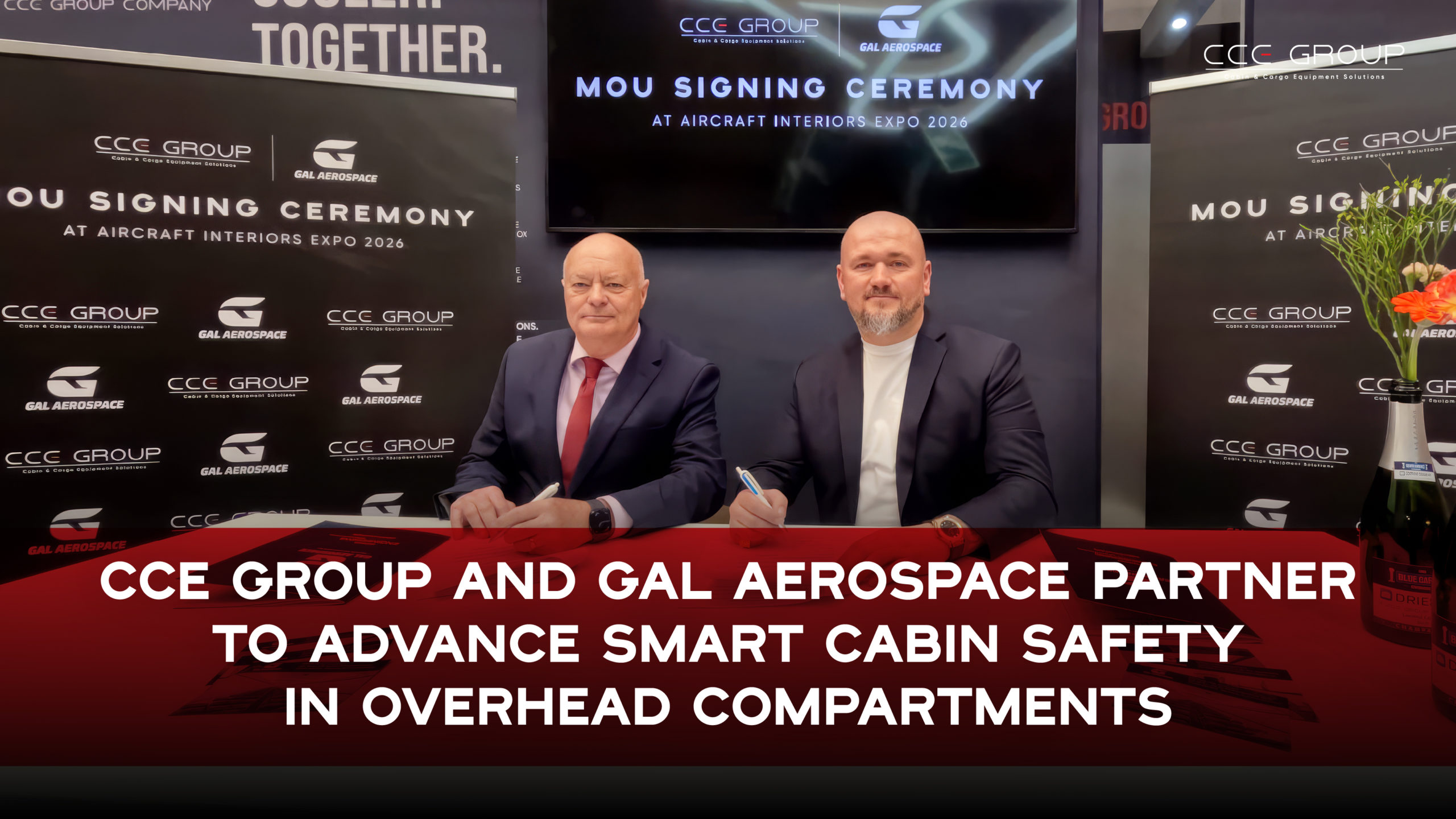
That is where GAL Aerospace matters.
Overhead bins are physical cabin environments, shaped by space, certification, maintenance, and airline operations.
Put smart sensing into real cabin environments, and the bin above your head becomes more than storage.
Passengers may never notice. That would be a success.
A safer cabin does not need to announce itself. It succeeds when complexity disappears.
The Cabin Story
That is the cabin story: Hidden systems working together.
The drink arrives cold. The meal tastes right. The trolley moves well. The seat feels cared for. The overhead bin becomes smarter before anyone has to think about it.
Passengers experience one journey. Airlines manage hundreds of moving parts.
Driessen, Icebridge, Trip & Co, InTech Aerospace, and AviusULD each solve a different problem of the cabin experience. Together, they make the hidden system stronger.
This is what CCE Group is built to do: Make the unseen parts of aviation work so well that passengers never have to notice them.
Every flight creates wear and tear and offers a chance to continuously improve. The goal is to stop small failures before they become the passenger’s problem.
Most people will never notice any of this. They should not have to.
You do not see the system behind the scenes, but you feel the result:
A smooth journey on your next flight.