You are probably carrying one of the world’s most profitable ecosystems in your pocket right now.
We use apps to book hotels, pay for lunch, stream music, store photographs and find lost devices. Each action feels like a separate convenience. Behind the screen, these companies are building deeper relationships with their customers. Every interaction adds information, removes friction and helps them understand what the customer may need next.
For example, Marriott Bonvoy makes the model easy to see. Its app provides one entrance to more than 8,700 hotels across brands built for different budgets, locations and reasons to travel. Customers can discover and book properties, manage points, check in, unlock rooms, contact staff, request services and, at participating hotels, even order food.
By the end of 2025, Bonvoy had nearly 271 million members, who accounted for 68 percent of Marriott’s room nights worldwide. During the same year, Marriott generated $5.38 billion in adjusted EBITDA and returned more than $4 billion to shareholders. Those figures do not isolate Bonvoy’s contribution, but they show how central the ecosystem has become to attracting customers, retaining them and directing business back into Marriott’s physical hotels.
Apple built an even larger ecosystem around physical devices. The iPhone, Mac, iPad, Watch and AirPods provide the entry points. Software, payments, entertainment, cloud storage and third-party applications connect those products through one account and one familiar interface. Apple’s $3 billion acquisition of Beats added headphones, audio technology and a subscription music service to that wider relationship.
In 2025, the App Store ecosystem facilitated more than $1.4 trillion in developer billings and sales, more than four times the $307 billion Apple generated from physical products. Apple did not record that $1.4 trillion as its own revenue, but the comparison shows the extraordinary scale of commerce flowing through the ecosystem it created. Apple’s own Services business, which includes App Store commissions alongside subscriptions, cloud services, advertising and other revenue, generated $109.2 billion in revenue during the year.
The real power of these digital ecosystems is greater than cross-selling. They become more valuable by becoming more helpful. Marriott learns where customers travel, which brands they choose and which benefits encourage them to return. Apple connects how customers communicate, listen, pay, work and store information. Each company can use that understanding to recommend relevant services, reward participation and remove decisions from the next interaction. Discounts may encourage loyalty. Usefulness earns it.
The same logic applies in aerospace, although most of the ecosystem remains invisible to the passenger. Airlines depend on specialist companies across cargo, catering, maintenance and digital systems. Each supplier may perform well, yet the airline is often left to connect those products, services and information itself.
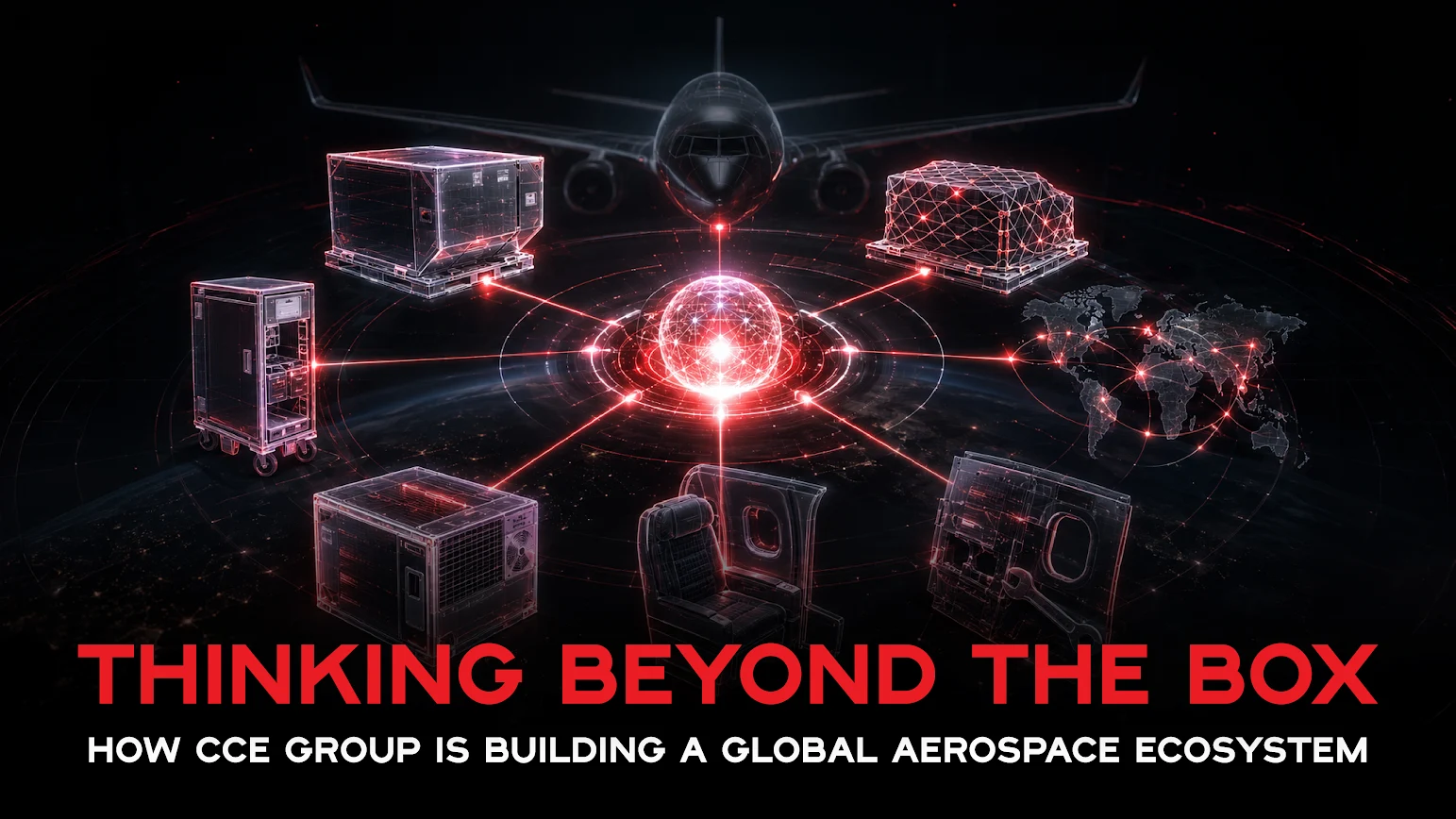
CCE Group has been built, and continues to develop, around those missed opportunities. Our industrial ecosystem connects products, data, services and specialist companies through smart solutions designed around how airlines actually operate, solving today’s problems while anticipating tomorrow’s.
Wherever Humanity Goes, Commerce Follows
If humanity establishes a colony on Mars, it will need cargo.
Food, medicine, machinery, scientific equipment, spare parts and personal possessions will have to travel with us. Passengers will still need to eat and drink during the journey.
We can make that prediction with confidence because aviation already shows us how movement works. Every day, airlines and logistics networks move essential goods through containers, warehouses, airports, aircraft and handling teams. Success looks like boring reliability: the bag arrives, the meal is loaded, the medicine stays cold and the component reaches the factory.
The distance and technology may change. The underlying challenge will not. Goods will still need to be contained, protected, cooled, secured, tracked and maintained.
Today, airlines manage thousands of assets across increasingly complex networks while trying to reduce cost, weight, waste and emissions. Lost equipment, ageing fleets, battery risks and fragmented information make that work harder.
I knew that hidden infrastructure from the inside. I began my career as a project manager, working across departments without the authority to command any of them. The role taught me how complex systems fit together and how much progress depends on people with different priorities moving toward the same outcome. I later led the business that became AviusULD.
That experience changed how I saw the industry. Better products would always matter, but airlines also needed help reducing the cost, risk and uncertainty surrounding their use. The opportunity was to connect equipment, data and services around the way airlines actually operate.
When Hivest acquired Safran’s cargo and catering activities in 2023, it backed the broader vision as well as the businesses themselves. AviusULD was already a leading producer of the containers and pallets that carry baggage and cargo inside aircraft. Driessen Catering Equipment was the market leader in the trolleys and galley equipment used to serve passengers in the cabin.
Both companies had spent decades building trusted relationships, specialist knowledge, and engineering discipline with customers, including many of the world’s leading airlines. They could have been treated as two successful businesses in attractive niche markets. Instead, we decided to use them as the foundation of a connected aerospace platform.
I accepted the Group CEO role with a clear mission: unite exceptional niche leaders into a global aerospace platform force while preserving what makes each unique. The final words matter. The platform had to expand the reach of AviusULD and Driessen without erasing the qualities that had made them market leaders.
Our shareholders’ backing gave us the ability to invest in technology, acquire complementary specialists and extend into services. We began with two market leaders. The next step was to make each one even more useful to customers and add capabilities that strengthened the core business.
Turning Traditional Products Into Strategic Assets
Every business says it understands its customers. The real test is whether it can see the cost, risk and waste surrounding the product it sells, then invest in removing them.
Airlines buy lots of cargo and catering equipment. They also absorb the cost of losing sight of them.
As containers move between airports, warehouses, freight forwarders and repair stations, they can disappear from view. An airline may lease or purchase additional equipment because it cannot locate the assets it already has, or send empty units across the world to cover a shortage elsewhere. Even location data leaves an important question unanswered: is the container empty or loaded? Without that information, airlines can reposition equipment unnecessarily while usable capacity remains elsewhere in the network.
We treated that uncertainty as part of the problem AviusULD was responsible for solving. That pushed our research and development beyond the unit load device (ULD) itself and into the information surrounding its movement and use.
Tracking technology already existed, but most systems came with compromises. Battery-powered devices eventually need charging or replacement. Fixed readers work only where somebody has installed the infrastructure. Basic location data may find an asset without revealing whether it is carrying cargo.
AviusULD and our technology partner eloc8 set out to remove those compromises. The result was SmartULD. The device converts movement and vibration into power, continually recharging itself as the ULD moves. Rather than waiting to pass an airport reader, it sends data directly over existing mobile networks. Satellite positioning locates the container outdoors, while Wi-Fi signals help locate it inside warehouses. An occupancy sensor adds the missing operational detail by showing whether the container is empty or loaded.
Airlines, freight forwarders and other customers can now identify where equipment is accumulating, anticipate shortages, distinguish loaded capacity from empty units and reposition ULDs according to demand. Better information also reduces unnecessary leasing, avoidable purchases and wasted journeys.
DHL Express was an early adopter of SmartULD, committing to an initial deployment of 30,000 devices. SmartULD generated power from normal movement and transmitted data without relying on airport readers or fixed infrastructure. Those 30,000 devices have now been delivered. Across the SmartULD network, the technology has visited 600 airports across 122 countries and mapped more than 7,000 off-airport locations. The data platform has processed more than 100 million messages in six months, giving customers a much clearer picture of how ULDs move and are used across the wider cargo network.
Driessen also began connecting equipment that airlines had traditionally managed with limited visibility. CLEO360 uses connected tags and a digital platform to show where catering trolleys are, how they move and how they are being used. Airlines can also monitor idle time, maintenance needs and operational steps such as cleaning and handover, giving them a clearer view of the fleet across the catering operation.
Safety created a more urgent problem. Lithium-ion batteries travel in phones, laptops, baggage and cargo on almost every flight. A damaged battery can release gases long before smoke or flames appear. Earlier detection gives valuable time to respond.
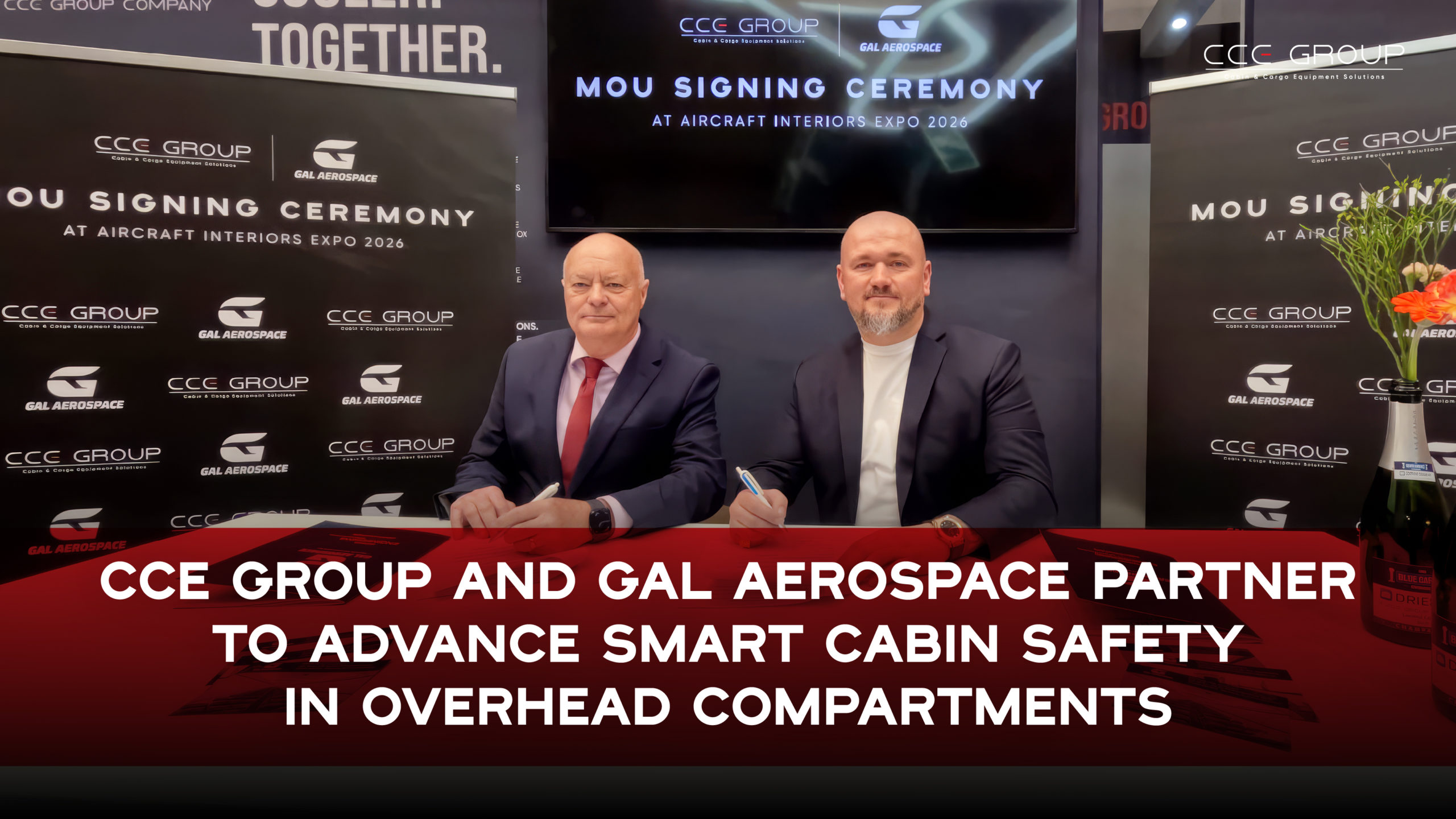
Technology developed around connected cargo assets has also moved into the cabin. AviusULD and eloc8 created the Smart Cabin Fire Tag to detect early warning signs of lithium-ion battery failure inside overhead compartments, up to two hours before a fire. The solution won the 2026 Crystal Cabin Award for Cabin Technologies. The jury praised its “simple and elegant approach to a highly relevant safety challenge” and saw “strong potential for it to become an industry baseline.”
Turning analogue equipment into connected, data-producing assets marked an important step in building the CCE Group ecosystem. A ULD or trolley could become part of the airline’s operating system, helping control costs, manage capacity, reduce risk and improve decisions.
Make Every Acquisition Strengthen the Core
An acquisition should make the business you already own more useful.
CCE Group began with leading positions in air cargo and onboard catering equipment. AviusULD and Driessen gave us trusted products, specialist engineering and established customer relationships. Those relationships also showed us what customers still had to source, coordinate and manage around the equipment we supplied.
AviusULD supplied the containers and pallets used to move cargo inside aircraft. Its customers also needed nets, straps, protective covers, thermal protection and fire-containment solutions to secure and protect what those containers carried.
We found an ideal partner in Trip & Co. The company served many of the same customers and brought specialist products that complemented AviusULD without duplicating its expertise.
Bringing Trip & Co into CCE Group created our Cargo Solutions Division around two established market leaders. Together, AviusULD and Trip & Co can address a broader range of the customer’s cargo needs through one coordinated relationship. Customers can work through one commercial contact, receive products in the same delivery and involve both engineering teams in shared product development.
AviusULD develops the containers and pallets. Trip & Co develops the equipment that secures and protects the cargo they carry. The customer receives a more complete solution with fewer suppliers, deliveries and technical conversations to coordinate.
Trip & Co’s thermal covers protect food, medicine and other temperature-sensitive goods during transport, storage and loading. That brings the Cargo Solutions Division into another problem shared across aviation: maintaining stable temperatures throughout the journey.
Driessen encounters the same problem in the cabin. Its trolleys and galley equipment help airlines serve passengers, but the food inside must remain safe and fresh from the catering facility until it reaches the passenger.
Icebridge helps solve another part of that cold chain. The company specialises in non-electric cooling and serves many of the same airlines. Its reusable cooling cassettes work with Driessen’s equipment to maintain more stable temperatures throughout the catering journey.
Bringing Icebridge into CCE Group created our Catering Solutions Division. Driessen understands the trolley, the galley, the aircraft environment and the demands placed on cabin crews. Icebridge understands temperature control throughout the cold chain. Together, they can connect onboard equipment with the non-electric cooling systems that protect food throughout its journey.
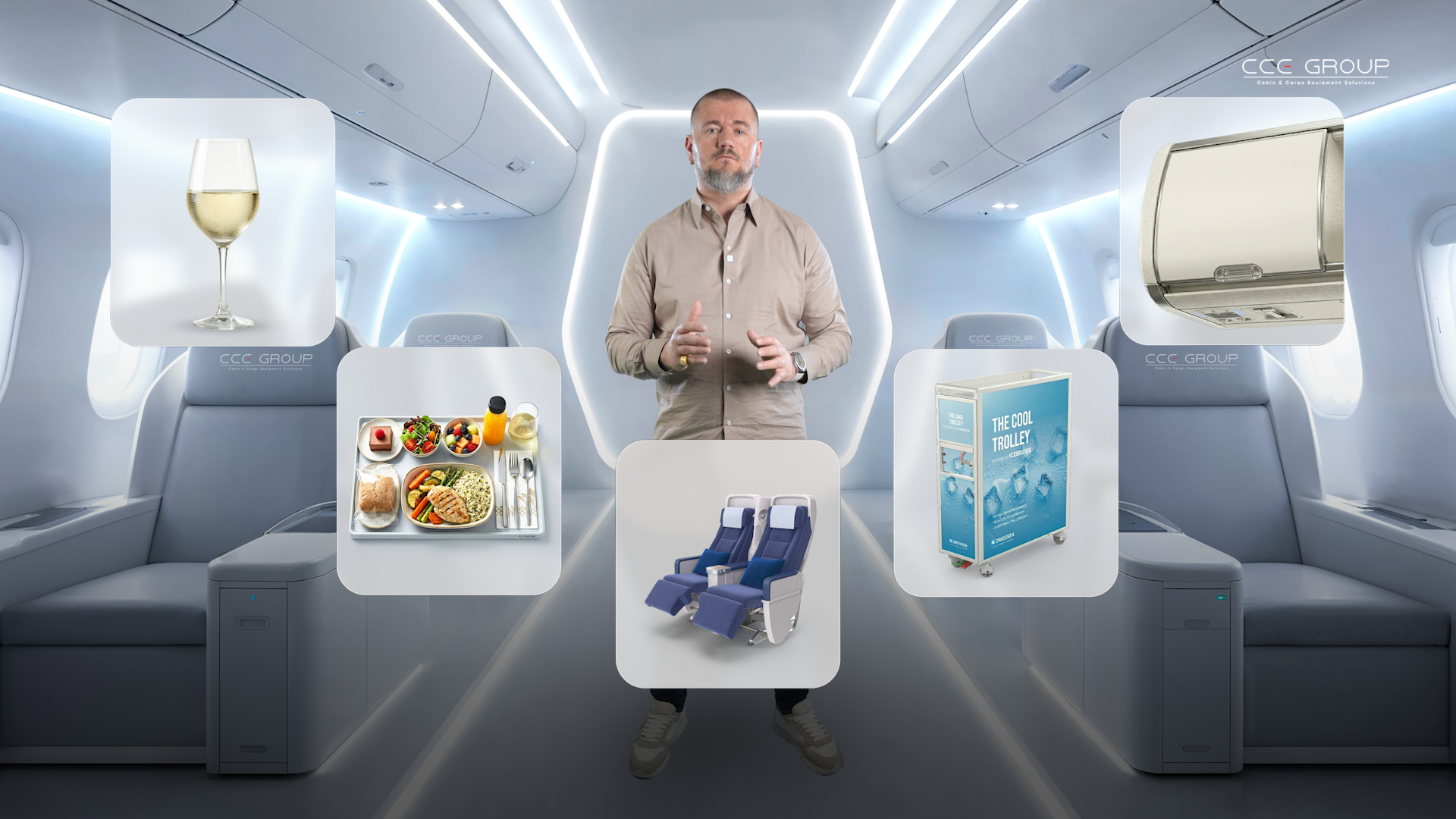
Their relationship produced the Cool Trolley and the Cooling Containers, built specifically around Icebridge cooling cassettes. Both teams worked together to improve compatibility, temperature stability, weight, handling, food quality and total cost of ownership for this specialist catering equipment.
The Catering Solutions Division can also use its combined position to challenge outdated industry practice. This year, Driessen and Icebridge signed the Vision Zero Dry Ice pledge, committing to develop no new products dependent on dry ice and encouraging airlines to move away from it by 2030.
Dry ice remains common because it provides cooling without onboard electricity, but it does not maintain a consistent temperature throughout the trolley. That uneven cooling can reduce freshness, negatively affect taste and shorten the usable life of food, increasing waste before the meal reaches the passenger.
Icebridge offers a more reliable alternative. Its reusable cooling cassettes require neither dry ice nor onboard electricity and maintain stable, evenly distributed temperatures throughout the cold chain. Integrated into Driessen’s catering equipment, including the Cool Trolley and Cooling Containers, the cassettes help food stay fresher for longer, taste better and reach more passengers instead of being discarded.
Together, Driessen and Icebridge give airlines a credible route toward more stable cooling, less waste and better food quality.
Our most recent acquisition extends the same logic beyond complementary products.
Airlines are keeping aircraft in service for longer, increasing the need for maintenance, repair and refurbishment. InTech Aerospace gives CCE Group specialist MRO capability across cabin interiors, including seats, upholstery, panels, plastics and composite components. It also strengthens our presence in North America, close to many airline customers already served across the group.
Its teams see how seats, panels, plastics, upholstery and composite components age in service, where failures occur and which design choices create unnecessary cost or downtime. That practical knowledge can inform future cabin engineering and product development while helping airlines keep interiors in service for longer.
The approach resembles the ecosystem logic behind Marriott. Each specialist retains its identity while extending the range of needs the wider group can serve. AviusULD and Trip & Co combine capabilities around cargo solutions. Driessen and Icebridge combine catering equipment with non-electric cooling to improve food quality. InTech extends CCE Group into cabin maintenance and refurbishment.
The right acquisition preserves the expertise that made the company valuable while making the existing business more useful. Buying revenue may make a company larger. Connecting complementary capabilities creates value that neither company could produce alone.
Mobilise the Ecosystem
An ecosystem becomes real when people across the company can see the future they are building together.
In January 2026, dozens of leaders from CCE Group, AviusULD, Driessen, Trip & Co and Icebridge travelled to Bangkok for CCE-X, our first group-wide leadership summit.
We held it in a Marriott Bonvoy hotel deliberately. Around us was a working example of specialist brands, services and customer information connected through one wider relationship.
Over two days, we examined the future of aviation, where the companies could collaborate, how shared customers could access more of the group through fewer relationships and which capabilities could become joint products or services.
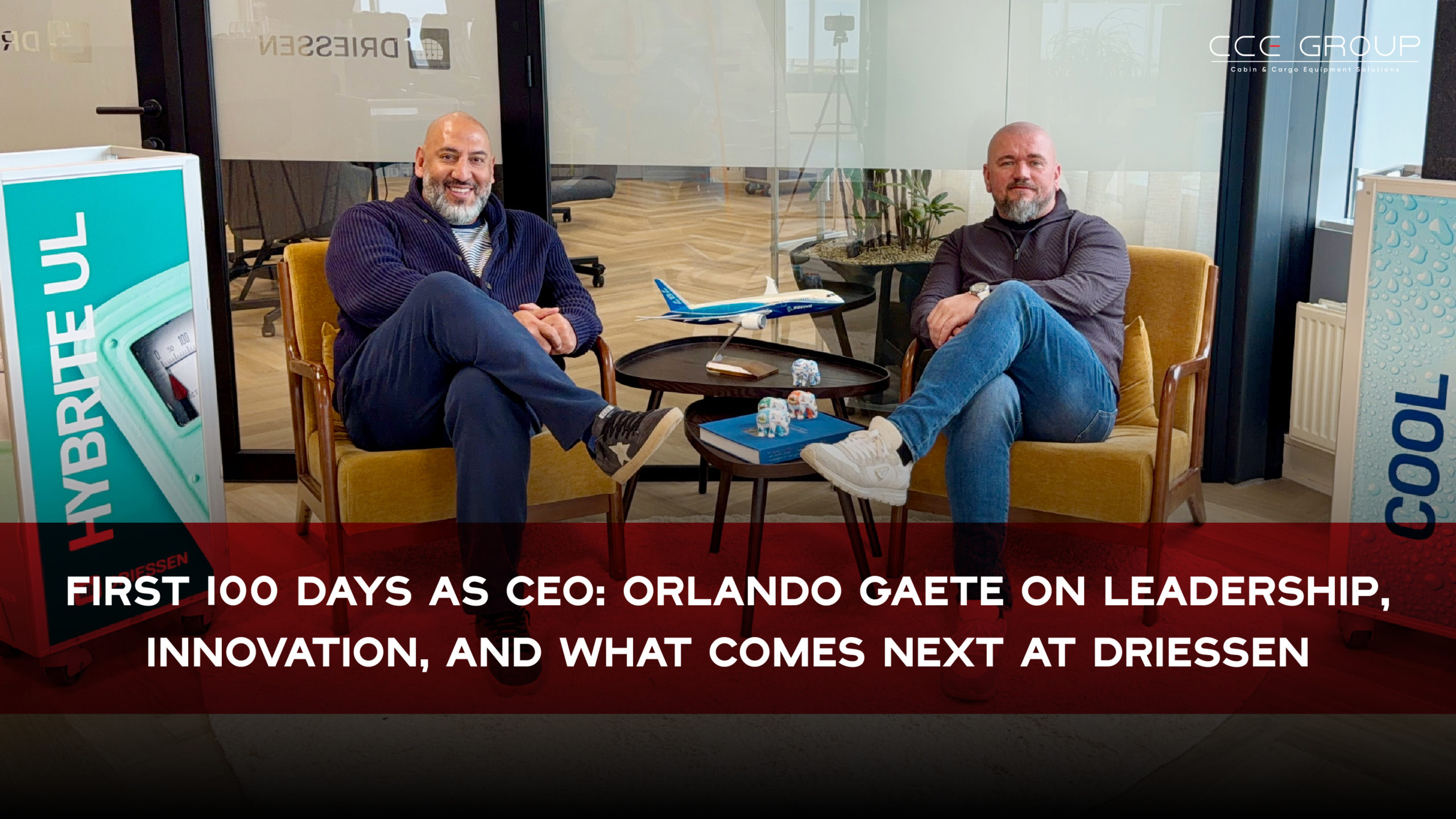
CCE-X helped crystallise the next stage of the ecosystem, and that stage is already underway. Our Cargo Solutions Division and Catering Solutions Division are now active, led by Charles Drummond and Orlando Gaete, bringing together the products, expertise and customer relationships within each area.
Smart technology is strengthening those connections further through SmartULD and CLEO360. Products across both divisions are increasingly connected through data, giving customers greater visibility across the full lifecycle of their assets, from location and usage to condition, maintenance and replacement. Better information improves decisions and makes each product more valuable as part of the wider ecosystem.
Our plan is to bring more of these capabilities together around the customer. Customers working with one part of the group should be able to access more of our cargo, catering and cabin expertise without starting again each time. Shared knowledge, connected product data and coordinated service can make those relationships more useful throughout the lifecycle of the equipment.
That will also change how some customers buy from us. Commercial agreements can bring several CCE Group capabilities into one relationship, giving customers a clearer route to the right product, service or specialist while each company continues to contribute its own expertise. As those relationships deepen, one interaction can help us understand and solve the next customer problem more effectively.
Further acquisitions will strengthen the existing divisions or help CCE Group solve other important customer needs. The standard will remain the same: preserve what made the specialist company valuable and ensure that its addition makes the wider group more useful.
Artificial intelligence can help forecast demand, identify asset imbalances, anticipate maintenance and improve the allocation of equipment. It can only do that when the physical operation produces reliable data. An algorithm cannot optimise an asset it cannot see. Connecting the analogue world comes first.
The immediate work may sound less dramatic than travelling to Mars. It means finding a container before an airline leases another one. It means reducing food waste while improving freshness. It means detecting a battery problem earlier, lowering the weight carried on every flight and extending the life of an aircraft interior rather than replacing it unnecessarily.
Every product, acquisition and technology investment must help the customer operate more safely, efficiently or sustainably.
The same lessons apply to industries outside aerospace. Begin with something customers already trust. Understand the costs, risks and frustrations surrounding it. Add digital capability where better information improves decisions. Connect complementary products and services around the customer’s outcome. Extend the relationship through the product lifecycle. Acquire selectively and protect the specialist expertise that created the value in the first place.
Apple and Marriott show what can happen when an ecosystem deepens the customer relationship. It can strengthen retention, increase participation, create recurring revenue and improve the quality of earnings.
The same logic will increasingly shape industrial businesses. Better products will remain essential, but competitive advantage will also come from staying connected to the asset throughout its working life, using data, services and complementary expertise to solve the next customer problem.
Aerospace will be one of the clearest tests of that shift. The next generation of aircraft will create new demands, risks and opportunities across cargo, catering and the cabin. Beyond that, nobody can say with confidence where aerospace technology will lead. New forms of transport, new operating models and exciting new destinations will create problems for customers that do not exist today.
Our mission gives us a clear direction of travel: unite exceptional niche leaders into a global aerospace platform force while preserving what makes each unique.
CCE Group will follow our mission wherever it leads.
Even if, one day, it leads to Mars.