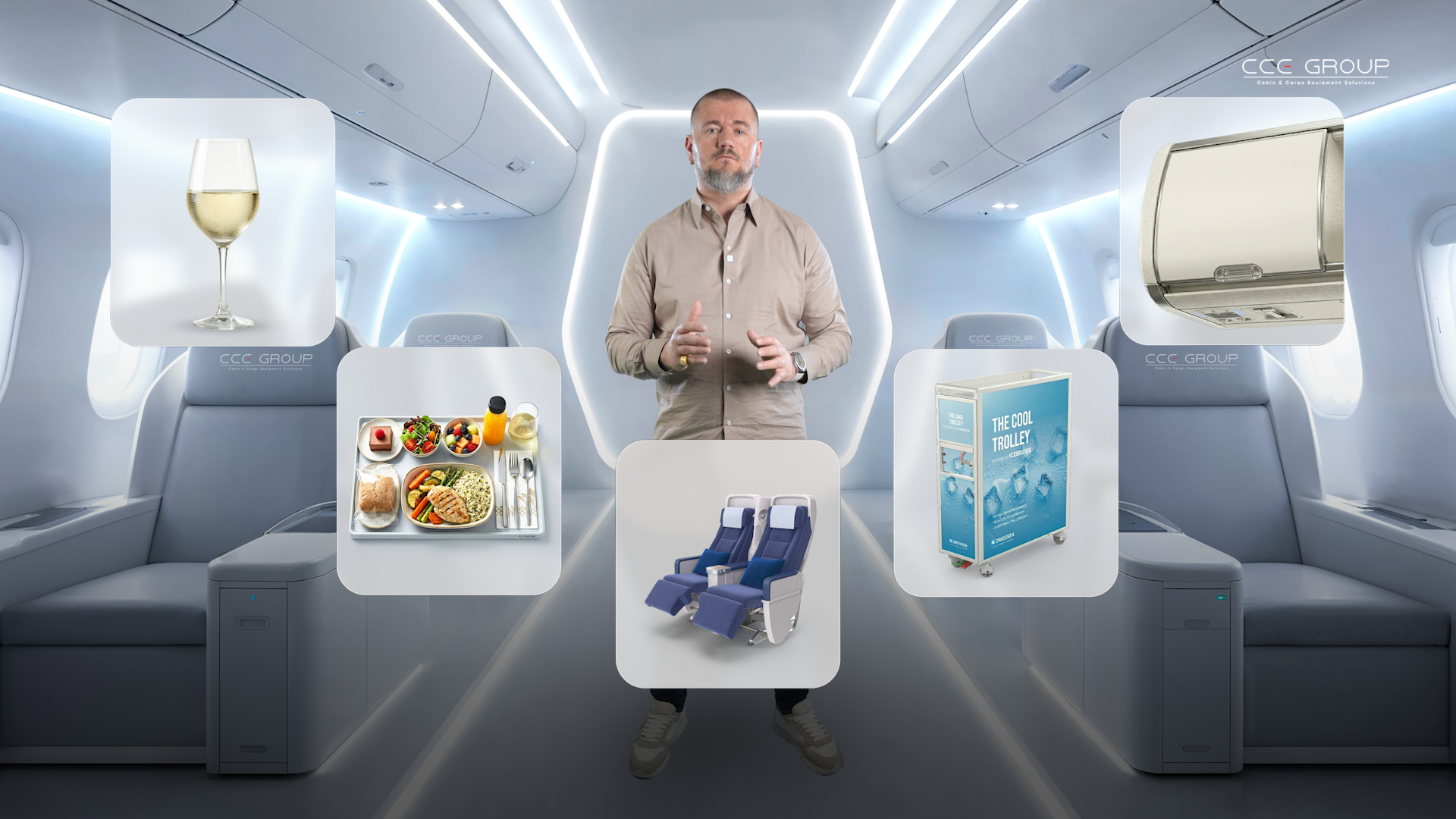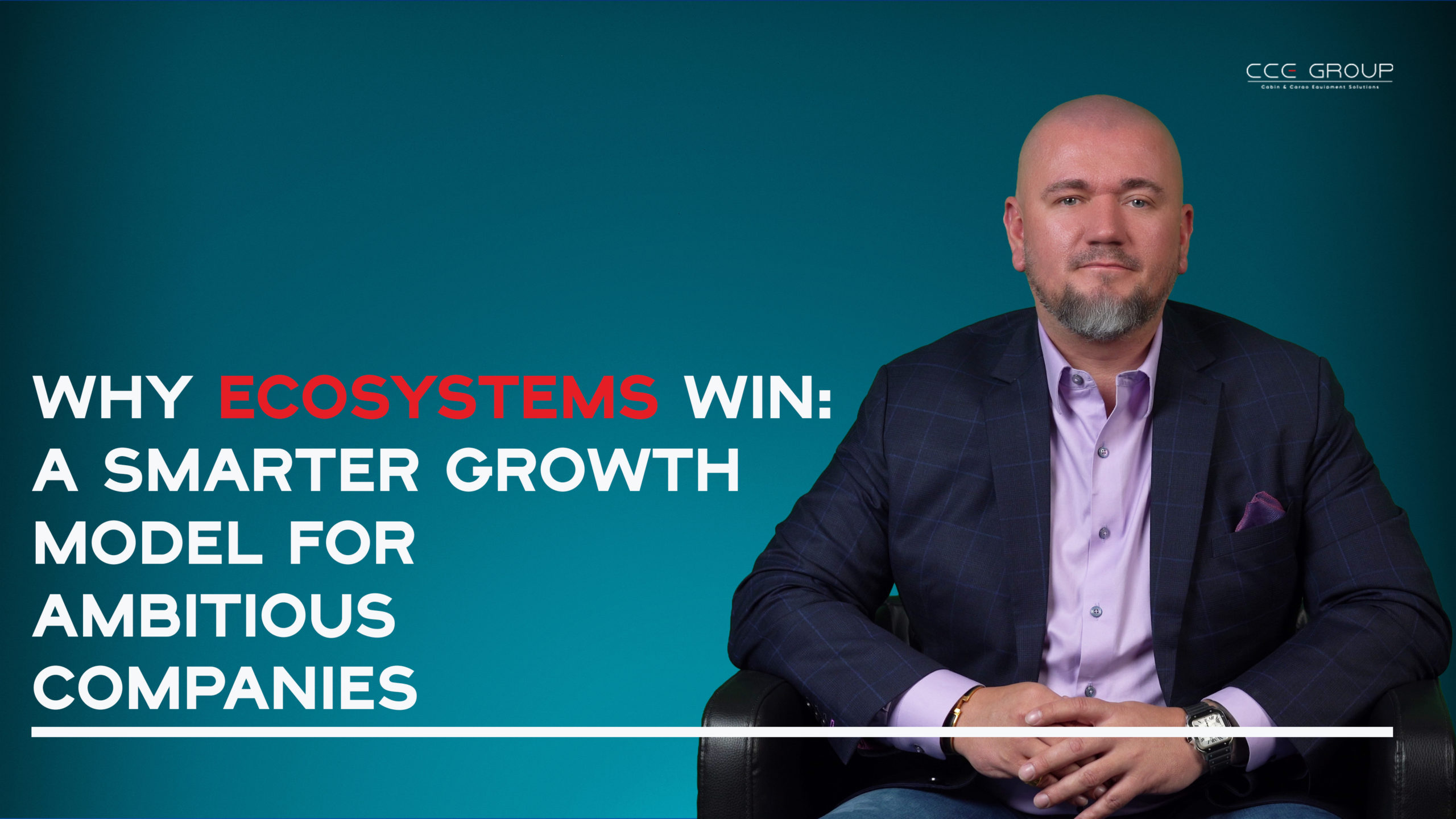
Hello, I am Klaus Hofmann, Group CEO of CCE Group. We are an industry leader in the cabin and cargo equipment space. It is a niche sector with complex challenges. But the ideas I want to share are universal. They apply to any business – and to any ambitious CEO that wants to grow smarter, scale faster, and build something that lasts.
Many companies function like island nations. They are focused, independent, and used to solving problems alone. But over time, that independence turns into isolation. Growth slows. Innovation flattens. Even the most successful companies can stagnate when they operate alone. That is where ecosystems come in.
In this video, we will take a practical look at how to build a strategic ecosystem. I will show you how vertical and horizontal integration work, how smart technology changes what is possible, and how cultural alignment turns M&A into something more than a spreadsheet exercise. Let’s begin.
Why Ecosystems Win
When most people hear “business ecosystem,” they think of Big Tech companies like Amazon, Apple or Google. Each one runs a connected world of products and services that feed one another. Your email. Your calendar. Your storage. Your phone. All connected, all learning, all improving together. All easily accessible from your office, phone and any location around the world with a single password.
But ecosystems are not reserved for Silicon Valley. Any business, in any sector, can build one, if it understands how the pieces can fit together. The old model of growth was simple. Make something. Sell it. Grow bigger. Acquire. Repeat. The model burns capital, time, and people.
Ecosystems take a smarter route. Instead of doing everything yourself, you build or acquire complementary capabilities and integrate them so value compounds. Look at Disney. They are much more than just a film studio. They are a content machine, a streaming platform, a merchandise empire, and a theme park operator. Every part amplifies the others. A new Star Wars show on Disney+ also becomes a new ride, a new toy line, a hotel theme, and a reason to subscribe. That is diversification designed for dominance.
For CEOs, the real value of an ecosystem is not scale. It’s connection. Every part reinforces the others. That interdependence becomes your competitive edge. You control more touch-points in the customer journey. You gain data, consistency, and loyalty. Each loop of interaction strengthens the next. You stop being a supplier in someone else’s chain. You become the platform that powers the system.
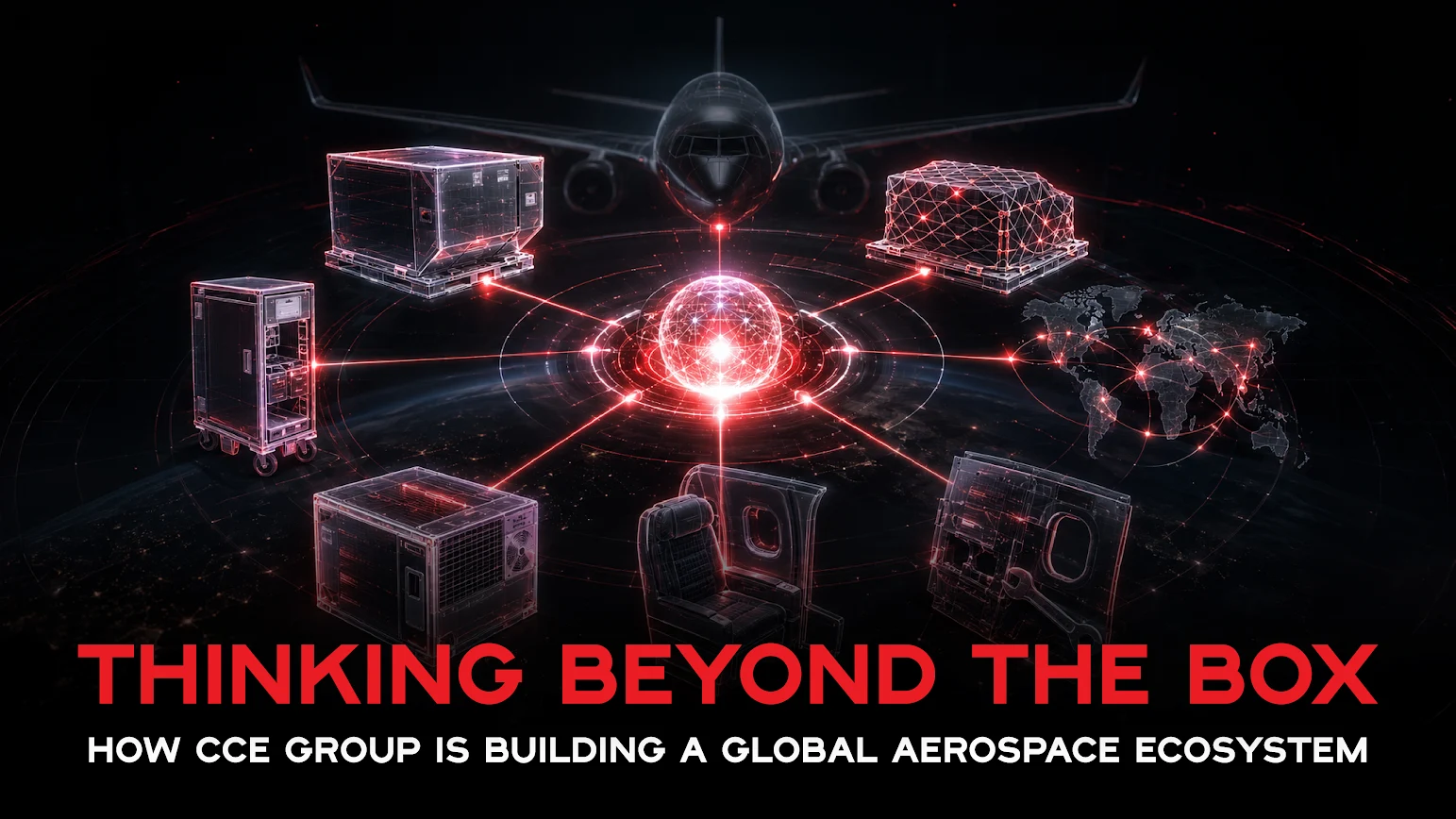
At CCE Group, we build our own version of this. But the logic is the same. We do not just acquire companies. We connect them. Cargo straps, fire containment solutions, ULDs, and cabin galley equipment may seem unrelated to outsiders. But when you align incentives, share their data, and bundle offerings, you give customers a seamless experience. This is the power of an ecosystem.
Horizontal and Vertical Integration – The Building Blocks of Ecosystems
When people hear the word integration, they often think it means acquisition. But integration is more than ownership. It is a strategy. It is one of the most powerful tools a CEO can use to build an ecosystem. There are two main types: horizontal and vertical. Understanding how to apply both determines how far and how fast you can scale.
Horizontal integration is about reach. It expands your presence across the market. When Facebook bought Instagram, it was not for another photo app. It was to control more of people’s attention. That single move gave them unmatched dominance in digital advertising.
Vertical integration, on the other hand, is about control. It strengthens your position in the supply chain by owning key inputs or distribution. When Netflix began producing its own shows, it stopped renting other people’s content and started owning the pipeline. That decision rewired the economics of entertainment. That is vertical integration.
Both approaches reduce dependency, increase margin, and tighten the feedback loop with your customers. At CCE Group, we have used both approaches. Our acquisition of Trip & Co was never just about cargo nets and thermal covers. It gave us control of a critical link in cargo safety, directly complementing AviusULD’s fire containment solutions product portfolio. That is vertical integration: strengthening the chain from within.
When Driessen developed CLEO360, it was not just a new product line. It brought catering process data under one connected platform. That is horizontal integration: expanding across a single layer to achieve scale, efficiency, and control. Horizontal builds reach. Vertical builds control.
The real advantage comes when you combine both. You create a system that connects markets and owns infrastructure. You stop reacting to supply and demand and start shaping them. You become the platform that others rely on to operate. That is the architecture of an ecosystem.
The Case for Smart Tech Integration
Many people think of digital transformation as a trend. Integrating smart technology is not about modernizing products. It is about reinventing business models. Airbnb did it for hospitality. Netflix did it for entertainment. Both turned static industries into dynamic systems that learn from every user.
When companies embed smart tech into their offerings, two things happen. First, the product becomes more valuable because it provides insight, not just utility. Second, the company becomes smarter because it collects data at scale and turns it into continuous improvement. Operations get sharper. Issues are predicted before they occur. Service becomes personal.
These companies do not sell products. They sell systems that think. At CCE Group, this is where we are headed. AviusULD’s SmartULD is a perfect example. It is a connected device, which gives operators geolocation, detects early signs of lithium battery thermal runaway, requires no setup of infrastructure, and never needs a battery replacement – because it charges through kinetic energy. That is not just a product upgrade. That is a new business model.
Driessen’s CLEO360 platform follows the same logic. It allows aviation catering teams to monitor equipment, track orders, access manuals, and optimize performance in real time. It turns every data point into a smarter operation. That is the real power of smart integration: each insight creates the next advantage.
The Strategic Use of M&A to Build an Ecosystem
Let’s be honest. Most M&A activity fails to deliver long-term value. Not because the companies are weak. Because they do not harmonize. At CCE Group, we do not acquire to grow bigger. We acquire to grow smarter.
In traditional business models, vertical integration means owning your supply chain. Horizontal integration means acquiring your competitors. Ecosystem integration is different. It means acquiring complementary capabilities and connecting them to deliver end-to-end value for customers.
That is what Apple did when it bought Beats. Not just for the headphones, but to build a music streaming ecosystem with hardware, software, and distribution all under one roof. That is also what Amazon did with Whole Foods. Not just to sell groceries, but to extend its logistics and last-mile delivery network into a new domain.
At CCE Group, we use the same principle. When we acquired Driessen and AviusULD, we were not just buying assets – we were connecting cabin and cargo. Two core domains in the aerospace sector. Then we added Trip & Co. Their straps, nets, fire containment covers and thermal protection products were already in use with AviusULD’s customers. The relationship existed. The customer need was clear.
Today, Trip & Co and AviusULD’s units are sold together: one price, one point of contact, one delivery. All integrated with the same technology. That is ecosystem synergy in practice.
This strategy creates three advantages. First, operational efficiency through shared teams, shared tools, and shared standards. Second, commercial strength through bundled offerings that no competitor can match. Third, innovation loops that feed themselves. Each company’s R&D strengthens the others. This is system-building in action. The more connected our companies become, the more value we deliver to our customers.
Culture and Empathy: Building Alignment at Speed
In most post-merger plans, companies focus on systems first. Reporting lines. Software platforms. Procurement tools. But in an ecosystem, the first system you must integrate is culture. Cultural integration means aligning behaviors, incentives, and decision-making styles across teams. Without it, even the best strategy fails.
People hesitate. They second-guess. They pull in different directions. This is where empathy becomes operational. When Disney acquired Pixar, they did not impose their own structures overnight. They kept Pixar’s leadership. They protected its creative process. They integrated only where it made sense. That respect unlocked creativity and collaboration. It turned a risky acquisition into one of the most successful integrations in entertainment history.
Empathy, in that case, was not sentiment. It was a system. A deliberate choice to protect what worked while aligning what mattered. At CCE Group, we take the same approach. Integration does not happen by accident. We build it deliberately.
Before an acquisition, we look for cultural fit: shared ambition, respect for expertise, and clarity under pressure. If those signals are missing, the integration will cost more than it delivers – no matter how strong the product is.
Empathy is not softness. It is precision. It means understanding your people, their motivations, challenges, and ambitions. Leaders who understand their teams build trust. And trust builds speed.
When we brought Trip & Co into the group, that process was already halfway done. They had already worked closely with AviusULD for years. Shared customers and shared challenges meant trust was already built. That made alignment faster and smoother. Not because it was easy, but because the foundation was there.
In an ecosystem, speed depends on trust. And trust is built through empathy. Not as a feeling, but as a method. Empathy allows companies to align faster, operate cleaner, and deliver value without delay.
A Smarter Way to Grow
You do not need an ecosystem to grow a business. Many companies have scaled through force, capital, or timing. But if you want growth that is fast, resilient, and built to last, ecosystem thinking is the smarter path.
We have seen how integration creates leverage. How smart technology turns products into platforms. And how cultural alignment turns strategy into reality.
Ecosystem thinking is not a privilege of Big Tech. It is a mindset that any ambitious CEO can apply. It takes more thought. More coordination. More patience. But the reward is a business that is connected, intelligent, and built to last.
At CCE Group, this is the model we are building. It is already delivering results. We unite exceptional niche leaders into a global aerospace platform force, while preserving what makes each unique. That is our mission. And that is the smarter way to grow.
Thank you for watching. I hope it gave you something useful to think about.